Bangidong Lifting Guide: Non-Surgical Lifting Options Near Jamsil Station
- 공유 링크 만들기
- X
- 이메일
- 기타 앱

Direct answer summary
If you are living in Bangidong or staying near Jamsil Station and you are starting to notice sagging around the cheeks, jawline, or neck, non-surgical lifting in Songpa-gu may help improve facial contour and skin elasticity without surgery. Common options include energy-based lifting devices such as Thermage, Shurink (HIFU), and Accent Prime, thread lifting for mechanical support, and collagen or skin boosters to improve firmness and texture. Many single-session non-surgical procedures can be completed during a single outpatient visit; actual appointment times vary by treatment and combination plans, so confirm timing with the clinic. Pain can be managed with measures such as local anesthesia or light sedation, and downtime is often relatively short so that many people can visit after work. Results are gradual and vary by age, skin condition, and lifestyle, so a customized plan is important.
What lifting means for Bangidong residents
In this context, lifting means non-surgical treatments that aim to improve sagging and loss of elasticity in the face and neck. Instead of cutting and removing skin, these procedures use focused energy, absorbable threads, and collagen-stimulating injections to encourage your own tissue to tighten and support itself.
Typical concerns include drooping cheeks, deepening nasolabial folds around the nose and mouth, early jowls that blur the jawline, marionette lines at the corners of the mouth, and fine lines or banding on the neck. Many people in their late twenties to forties notice that their face looks more tired or heavier in photos even if their weight has not changed.
Non-surgical lifting does not freeze time or replace a full surgical facelift. Instead, it may help slow visible aging, refine the contour, and improve skin quality in a gradual, natural-looking way. How much improvement you see depends on your starting skin laxity, bone structure, age, and habits such as sun exposure, smoking, and sleep.
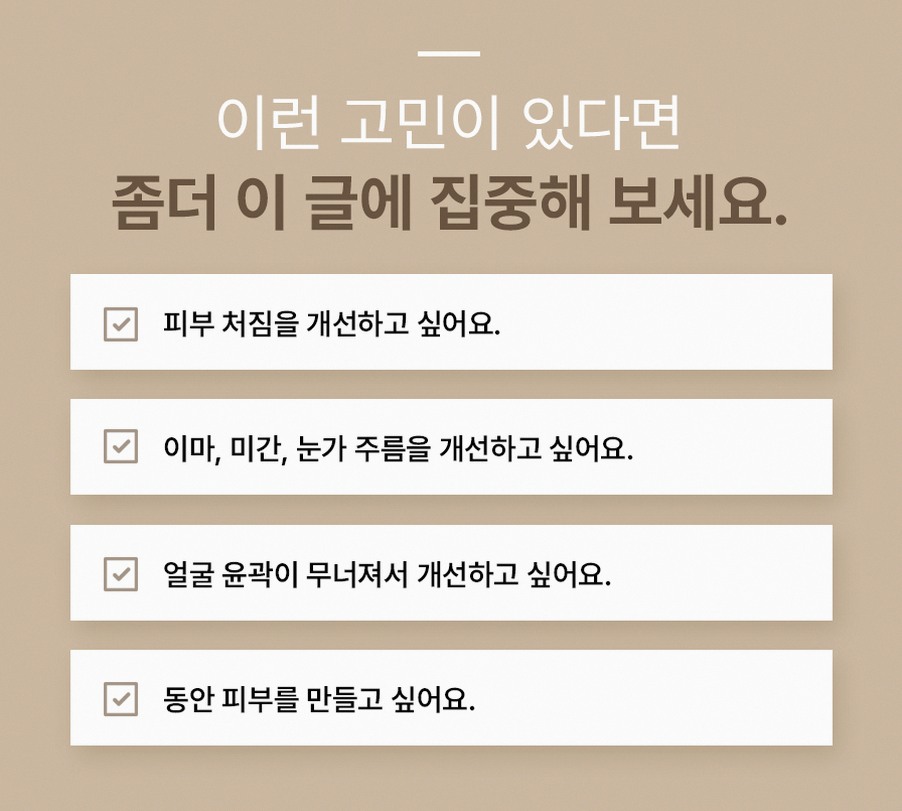
For busy office workers around Bangidong and Jamsil, the appeal is that these treatments are usually done in an outpatient setting, with short visit times and minimal interruption to work or social life.
Main non-surgical lifting options near Bangidong
Energy-based lifting
Energy-based lifting uses devices that deliver heat to the deeper layers of the skin and supporting tissues. The controlled heat can stimulate collagen production and cause some tightening over time.
Thermage
Thermage is a monopolar radiofrequency device designed to heat deeper collagen-rich layers of the skin. It is often used for the full face, jawline, and sometimes the neck or eye area.
A Thermage session usually involves marking the treatment zones, applying a coupling fluid, and then delivering a series of pulses. Many people feel a brief heat and tingling sensation with each shot. The goal is to trigger collagen remodeling over several months. It is often done as a single session, with maintenance after a period that can vary by individual.
Shurink (HIFU)
Shurink is a high-intensity focused ultrasound (HIFU) device. It delivers focused ultrasound to deeper layers of the skin and supporting tissues; depth and energy settings vary by device and patient.
Because the depth and energy can be adjusted, Shurink can be used for the jawline, cheeks, and sometimes delicate areas such as under the chin or along the lower face. During treatment, you may feel short bursts of prickling or heat inside the tissue. Many people find this tolerable with topical or local anesthesia, but sensitivity varies.
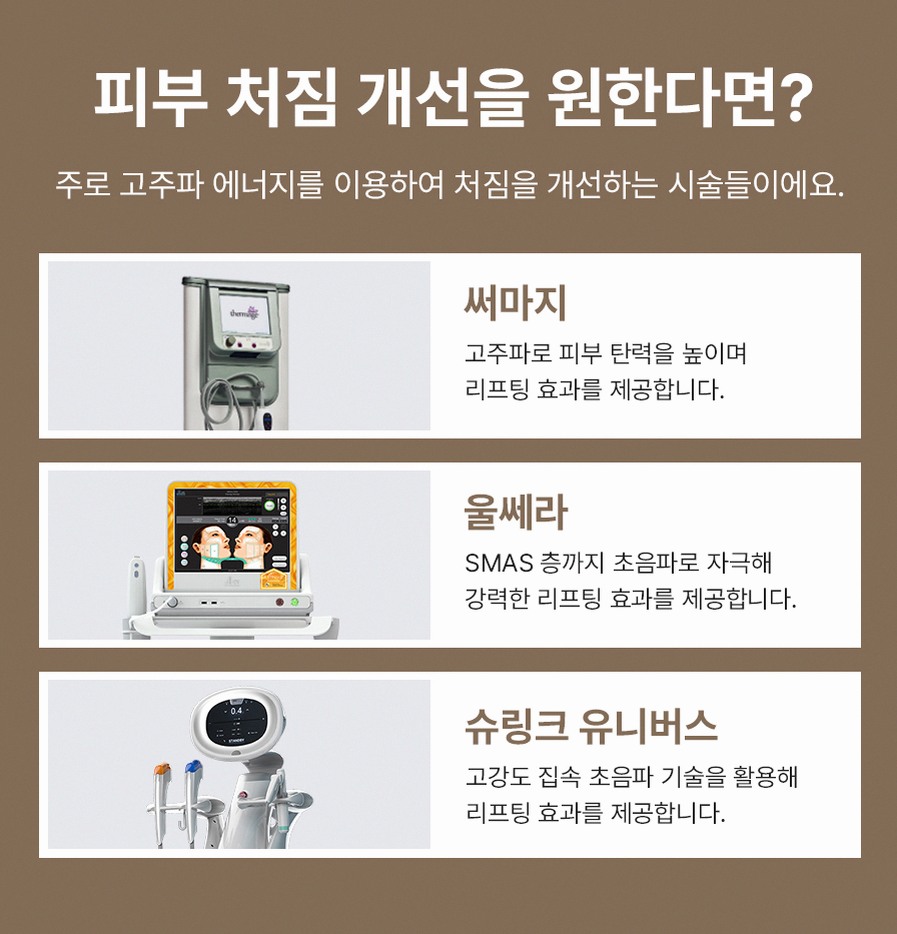
Accent Prime
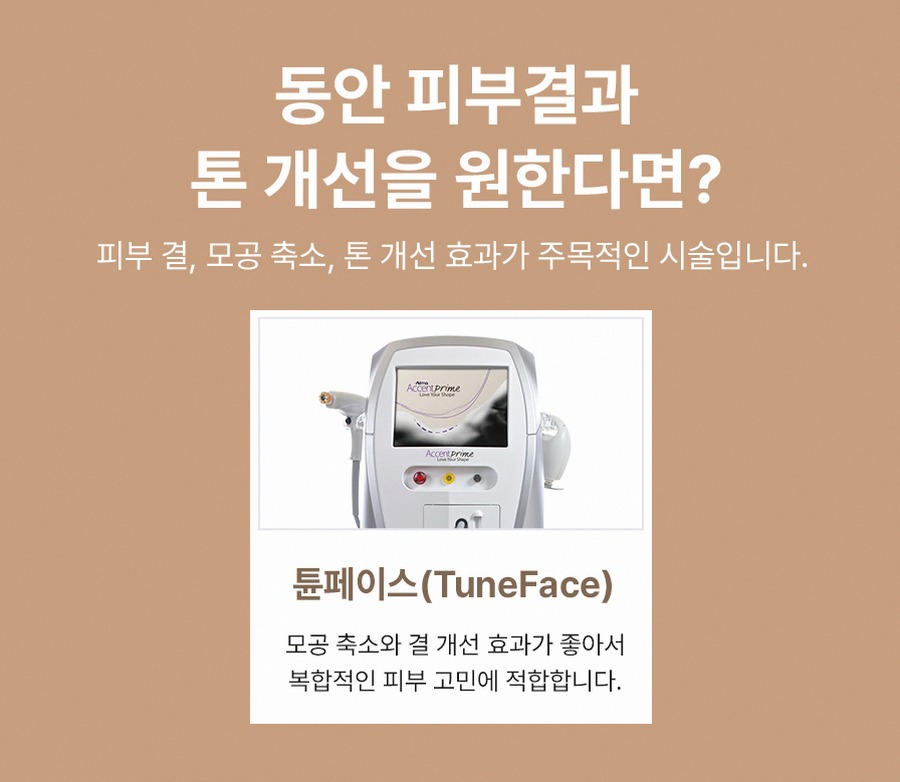
Accent Prime is a radiofrequency-based device used for skin tightening and contouring. It can be applied to the face to improve mild laxity and texture, and in some cases to body areas for firmness.
The sensation is usually a deep warming feeling as the handpiece moves over the skin. Compared with some other devices, it may feel more like a heated massage, although this also depends on the settings and your sensitivity.
Thread lifting
Thread lifting involves inserting fine absorbable threads under the skin through small entry points. These threads have tiny barbs or cones that anchor into the tissue and help reposition sagging areas. Over time, the threads are absorbed, while the mechanical stimulation can encourage collagen production along their path.
Thread lifting is often considered for people with mild to moderate sagging, early jowls, or mid-face drooping. It can help define the jawline, lift the cheeks slightly, and soften nasolabial and marionette lines.
The choice of thread type, length, and insertion pattern should be tailored to your facial structure and degree of laxity. For example, heavier jowls may need stronger lifting threads along the jawline, while a younger face with only mild drooping may benefit from fewer, more subtle vectors.
Collagen and skin boosters as lifting support
Collagen and skin boosters are injectable treatments designed to improve skin quality, hydration, and elasticity. Examples include products such as Rejuran Healer, Juvelook, Radiesse, Belotero Revive, and similar formulations.
These are not mechanical lifting treatments in the same way as threads, but they can support a lifting plan by thickening and strengthening the dermis. This can help fine lines, crepey texture, and overall firmness. Some products focus more on collagen stimulation, while others emphasize hydration and glow.
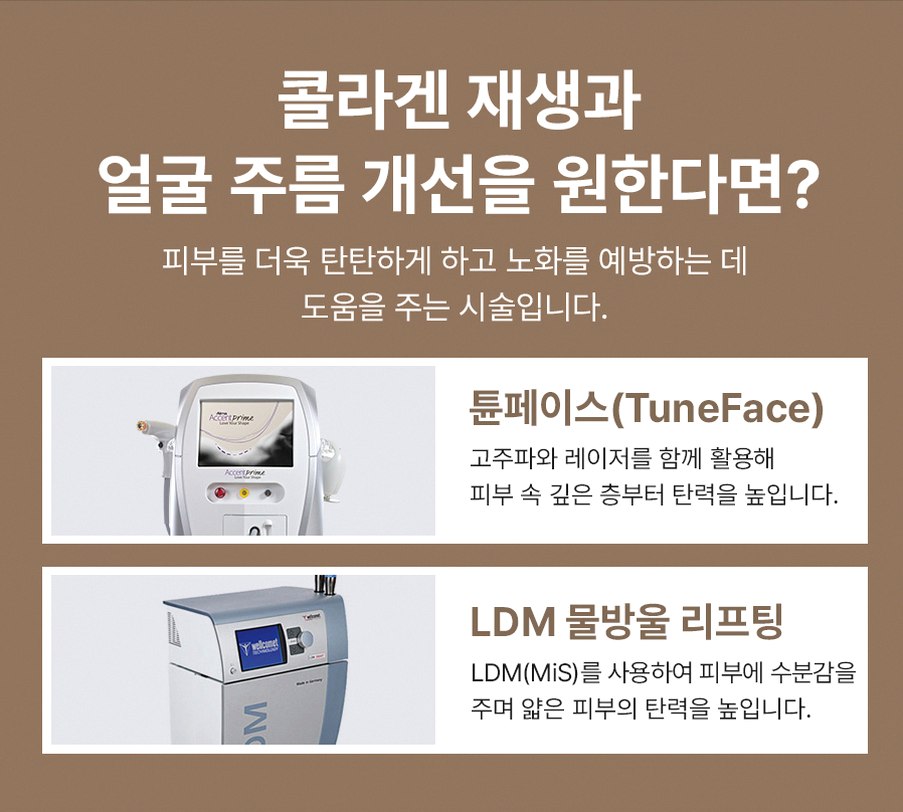
In practice, these boosters are often combined with energy-based lifting or threads. For example, someone may receive Shurink for structural tightening and a collagen booster to improve the quality of the skin on the cheeks or neck.
How customized lifting plans are built
Instead of fixed one-size-fits-all packages, a more modern approach is to build a plan based on your age, skin laxity, facial proportions, and schedule. A clinic near Jamsil Station that also runs a pain clinic can design a step-by-step program that fits your tolerance for discomfort and downtime.
Examples of typical plans
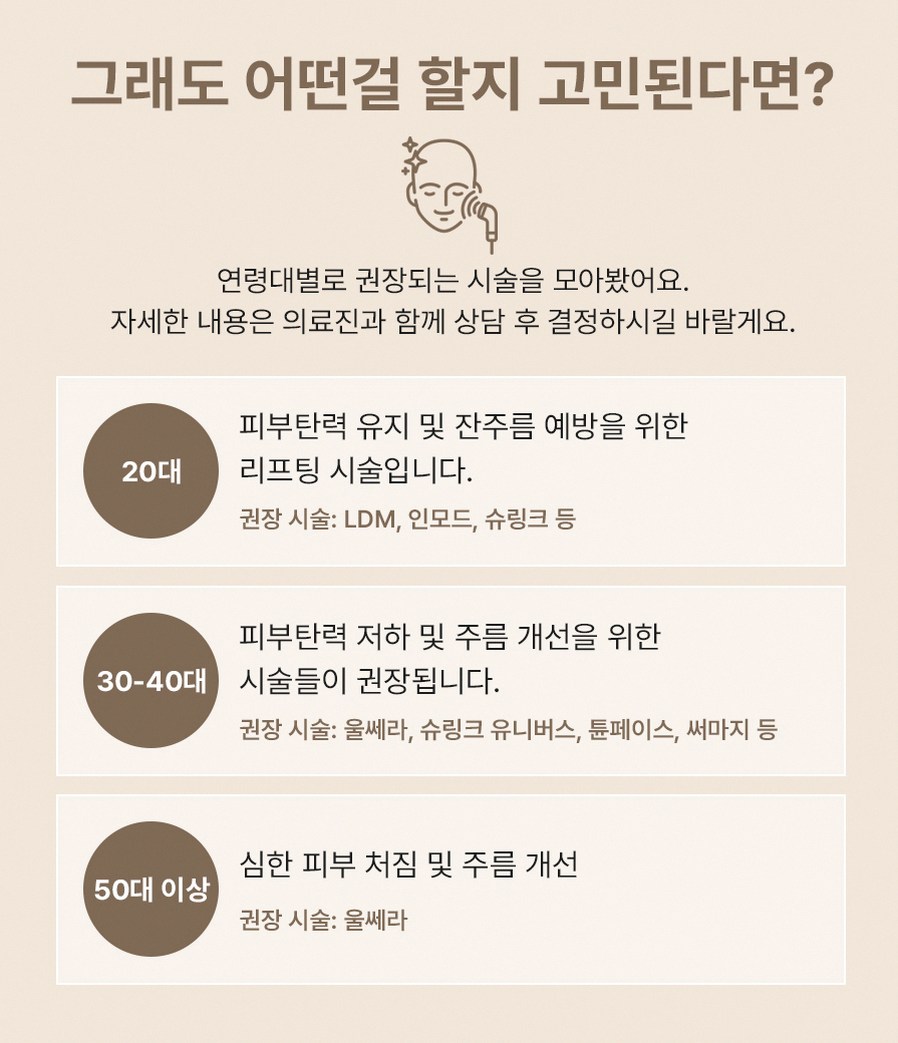
For a younger patient in their late twenties or early thirties with mild sagging, a plan may focus on prevention and subtle tightening. Shurink or Accent Prime can be used for light lifting, combined with a gentle skin booster to maintain elasticity and glow. The goal is to delay more obvious sagging rather than to change the face dramatically.
For someone in their late thirties to forties with moderate sagging and early volume loss, a combination may be suggested. This could include Thermage or Shurink for deeper tightening, selective thread lifting to support the jawline or mid-face, and collagen boosters or fillers in specific areas where structure has been lost. The exact brands and amounts are chosen based on the area, skin thickness, and safety considerations.
For focused concerns such as neck wrinkles, horizontal neck lines, or fine lines around the mouth, targeted boosters and fine-line treatments may be used. Energy-based devices can be adjusted for the neck, and microinjections can help improve the thin skin in that region.
When you compare clinics, it can be useful to ask not only about price but also about which devices they use, how many shots or how much energy is planned, whether threads are included, and what kind of boosters are suggested. This helps you understand what is actually being done for your face.
Pain management and comfort
For many people, the main hesitation about lifting is fear of pain. In this setting, it can be reassuring that the clinic’s lead doctor has a background in anesthesiology and the clinic also operates a pain clinic for chronic musculoskeletal pain.
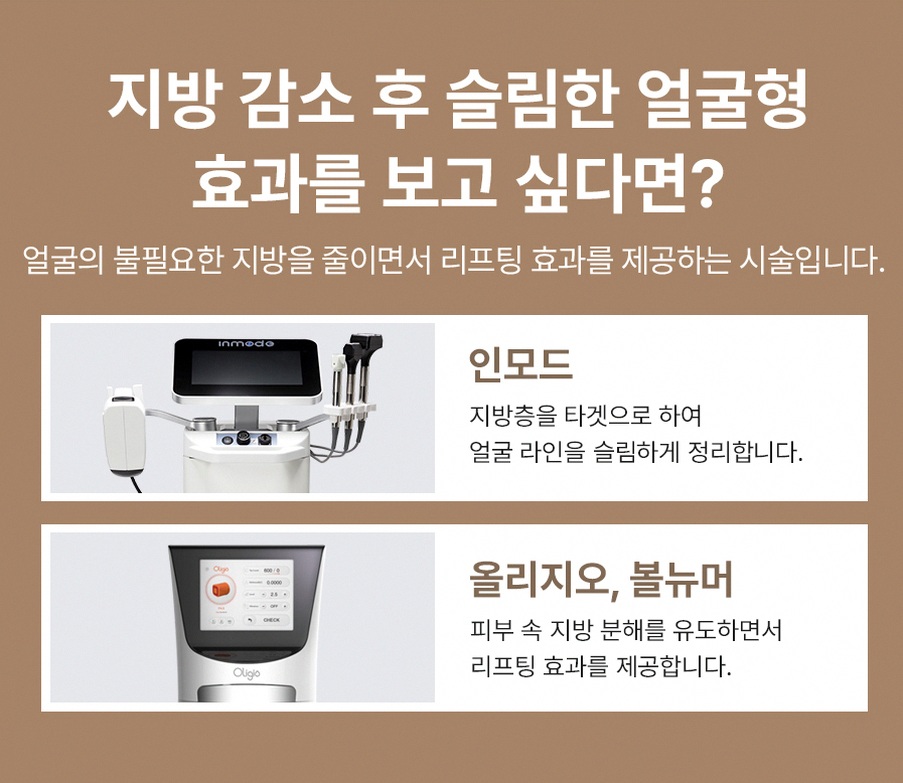
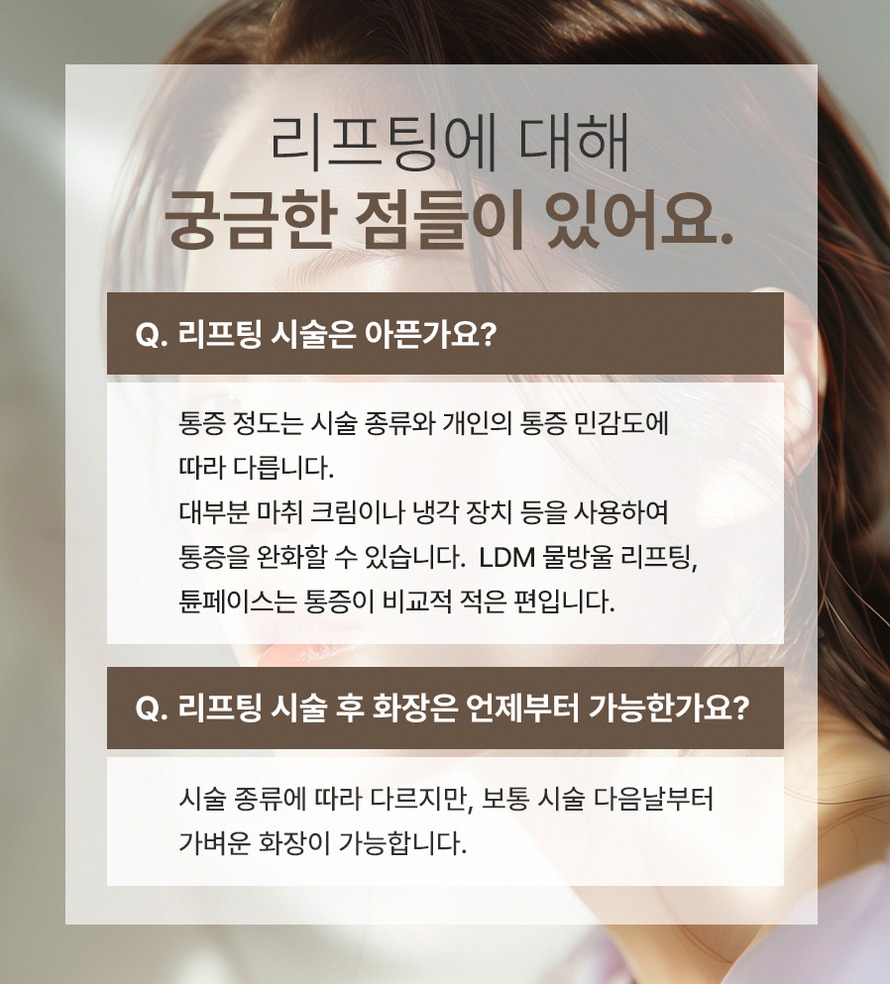
This experience can be applied to aesthetic lifting in several ways. First, there is a systematic approach to anesthesia. Depending on the procedure, options may include topical numbing cream, local anesthetic injections, or, when appropriate and safe, light sleep sedation. The goal is not to remove every sensation but to keep discomfort at a manageable level.
Second, device parameters such as energy level, number of shots, and depth can be adjusted to balance effect and comfort. For example, a patient who is very sensitive may start with slightly lower energy and build up over time.
Third, patients who are anxious about pain can be monitored more closely, with clear explanations before each step and the option to pause when needed. Because the team is familiar with pain management in other medical contexts, they are used to assessing vital signs and overall safety.
It is important to understand that no procedure is completely pain-free. You may still feel heat, pressure, or pulling during energy-based lifting or thread insertion. However, with proper planning, these sensations can often be significantly reduced.
Step-by-step process for lifting near Bangidong
Initial online consultation and pre-visit preparation
For overseas patients or busy professionals, an online consultation is often the first step. You may be asked to send clear photos of your face from the front and both sides, in good lighting without filters. You will usually fill in a medical questionnaire covering medications, allergies, previous procedures, and any chronic conditions.
At this stage, you can share your main concerns, such as sagging jawline, deep smile lines, or neck wrinkles, and your preferred treatment window during your stay in Korea. You can also mention your pain tolerance and whether you have had any issues with anesthesia in the past.
Based on this information, a preliminary plan and estimated schedule can be suggested. Final decisions are usually made in person after a detailed examination.
In-clinic consultation and assessment
When you visit the clinic, the doctor will examine your skin laxity, facial proportions, and areas of volume loss. They may gently lift certain areas with their fingers to show what kind of change is realistic with non-surgical methods.
Your medical history will be reviewed again to check for conditions or medications that might affect bleeding, healing, or anesthesia. If you have had previous lifting treatments, fillers, or other procedures, it is helpful to bring any records or at least approximate dates and brands.
Treatment planning and pain control plan
Next, you will discuss specific treatment options. This may include choosing between Thermage, Shurink, Accent Prime, thread lifting, and various boosters, or combining them. The doctor will explain the expected timeline, such as when you might start to notice changes and how long they may last.
A pain control plan will also be created. For example, a simple HIFU session might be done with topical cream and local anesthesia, while a more extensive thread lifting procedure might be combined with light sleep sedation if appropriate and if you agree.
Procedure day experience
On the day of the procedure, you will usually arrive a bit earlier for consent forms and anesthesia. For energy-based lifting, numbing cream may be applied and left on for a set time. For thread lifting, local anesthetic injections are typically used at the entry points.
During Thermage or Accent Prime, you may feel cycles of heat and cooling. During Shurink, you may notice brief, sharp sensations deep in the tissue. With threads, you may feel pressure or pulling as the threads are placed and adjusted. Staff will check in with you about your comfort level throughout.
Immediate aftercare
Right after treatment, mild redness, swelling, or a tight feeling are common. Cooling packs may be applied, and a soothing cream or basic skincare products may be recommended. Specific procedures carry their own typical risks: for filler or botulinum treatments, bruising and swelling are common and rare but serious complications such as vascular occlusion can occur; for laser or high‑frequency energy treatments, transient erythema and possible pigment changes (hyperpigmentation or hypopigmentation) may happen. You will receive instructions on what is normal and what signs should prompt you to contact the clinic, such as severe pain, unusual asymmetry, or signs of infection, and informed consent should cover expected side effects and rare but important risks.
For thread lifting, you may be advised to sleep on your back for a few days, avoid heavy chewing or exaggerated facial expressions, and refrain from intense exercise for a short period. Bruising and tenderness can last several days to a couple of weeks, depending on your body and the extent of the procedure.
Follow-up and maintenance
A follow-up visit is often scheduled to check healing and early results. Additional sessions for energy-based lifting or boosters may be planned depending on your response.
Maintenance intervals vary. Many people repeat some form of lifting every six to twelve months, but this is individualized. The doctor may adjust the plan over time as your face and skin change.
Downtime, results, and maintenance expectations
Downtime
Energy-based lifting such as Thermage, Shurink, and Accent Prime usually has minimal downtime. You might experience temporary redness, mild swelling, or sensitivity that often settles within hours to a few days. Most people can return to work the same or next day, using simple makeup to cover any redness.
Thread lifting tends to involve more visible downtime. Bruising, swelling, and a feeling of tightness or pulling are common for several days. Some people notice slight irregularities or dimpling at first, which often smooths as the tissue settles. You may need to adjust your sleeping posture and avoid facial massages or strong pressure for a period advised by the clinic.

Onset and duration of effect
With energy-based devices, some people feel a subtle immediate tightening, but the main changes come gradually as collagen remodels over several months. With thread lifting, there is usually an immediate mechanical lift, followed by gradual collagen stimulation along the threads.
Collagen and skin boosters tend to show their effect over weeks, as the skin becomes more hydrated and elastic. The degree and speed of change vary widely among individuals.
Maintenance and lifestyle
To maintain results, most people consider repeat treatments at intervals suggested by the doctor, often in the six to twelve month range depending on the device and personal factors. Combining smaller, regular treatments can sometimes be more natural and manageable than waiting for a large change.
Lifestyle plays a major role. Consistent sun protection, basic skincare, stable weight, good sleep, and avoiding smoking can all support collagen and slow sagging. Without these, any lifting effect may fade more quickly.
Safety and who may consider lifting
Who may be a good candidate
Non-surgical lifting may be suitable for adults with mild to moderate sagging, early jowls, fine lines, and decreased elasticity who prefer to avoid or delay surgical options. It can also be considered by people who have already had some procedures and want maintenance.
Who needs extra caution or may not be suitable
People with severe sagging or very heavy tissue may not see enough benefit from non-surgical lifting alone and might need to consider surgical opinions. Those with certain medical conditions, bleeding disorders, active skin infections, or who are pregnant may need to postpone or avoid some treatments.
Medications that affect bleeding or healing, such as some blood thinners, also require careful review. Realistic expectations are essential. Non-surgical lifting aims for improvement, not transformation.
Importance of full disclosure and realistic expectations
Before any procedure, it is important to share your full medical history, including supplements, previous treatments, and any tendency to scar or bruise. This helps the clinic plan safely.
You may see photos or hear stories from others, but individual results always vary. Any examples should be seen as possibilities, not promises. A good consultation will focus on what is realistic for your face and your lifestyle.
Local and practical information for Bangidong and overseas patients
The clinic is located in Songpa-gu on Ogeum-ro, in a building near Jamsil Station, about one minute on foot from exit 10. This makes it convenient for residents of Bangidong and nearby areas, as well as for overseas visitors staying around Jamsil.
Weekday hours extend to 20:30, which allows many office workers to schedule lifting treatments after work. There are also Saturday daytime hours, while Sundays and public holidays are closed. For international patients, this schedule can be helpful when planning a short stay in Seoul.
Expected Korea visit timeline for overseas patients
For visitors from abroad, a typical schedule might look like this. On day one, you have an in-person consultation and, if suitable, proceed with energy-based lifting or boosters on the same day. If thread lifting is planned, it may be done on day one or day two, depending on your evaluation and preparation needs.
You may want to allow a few extra days in Seoul after thread lifting to manage any swelling or bruising before flying home, especially if you prefer to rest. For energy-based lifting alone, many people feel comfortable traveling sooner, but it is still wise to keep at least a day or two free in case of unexpected sensitivity.
Aftercare advice can be followed at home, and follow-up can be done by online consultation, with photos sent at agreed intervals.
Pre-visit checklist and questions to ask
Before you decide on a clinic, it can help to prepare a small checklist. Note your main concerns in order of priority, such as jawline, nasolabial folds, or neck. Collect any previous treatment records if available.
When you contact the clinic, you may want to ask which lifting devices they use, how they decide between Thermage, Shurink, and Accent Prime, and whether thread lifting is available. It is also useful to ask how they manage pain, whether sedation is an option, how long you should plan to stay in Korea, and what kind of aftercare is provided.
By focusing on these practical points rather than only on price, you can better compare clinics and choose a plan that suits your needs and schedule.
Frequently asked questions
Is non-surgical lifting enough if I have noticeable sagging around my jawline?
Non-surgical lifting can help improve early to moderate sagging around the jawline by tightening tissues and, in some cases, providing mechanical support with threads. However, if sagging is severe or if there is a large amount of excess skin, the effect may be limited. In such cases, the doctor may explain that surgical options could provide a more significant change. A face-to-face assessment is important to understand what is realistic in your situation.
How painful are Thermage, Shurink, and thread lifting?
Most people describe energy-based lifting such as Thermage and Shurink as involving brief episodes of heat or sharp tingling, which can be uncomfortable but usually tolerable with numbing and local anesthesia. Thread lifting tends to involve more noticeable sensations of pressure and pulling during insertion. With careful anesthesia and, when appropriate, light sedation, discomfort can often be significantly reduced, but you should still expect some sensations during and after the procedure.
How long do lifting results usually last, and how often should I repeat treatment?

The duration of effect varies widely. Many patients consider repeating energy-based lifting every six to twelve months, while thread lifting effects may be maintained for a similar or slightly longer period depending on the individual. Collagen and skin boosters may be repeated at intervals recommended by the doctor, such as every few months initially and then less often. Your age, skin quality, lifestyle, and how your tissue responds all influence how long results seem to last.
Can I have lifting treatment during a short business trip to Seoul?
Yes, many visitors schedule non-surgical lifting during a short stay, especially because the clinic near Jamsil Station has extended weekday hours. If you are planning only energy-based lifting and boosters, it is often possible to fit consultation and treatment into one or two days. If thread lifting is included, you may want to allow a few extra days for initial recovery before important meetings or flights. An online consultation before you travel can help design a realistic schedule.
Soft call to action
If you are considering Bangidong lifting and would like to explore non-surgical options near Jamsil Station, an online consultation can be a practical first step. By sharing your concerns, photos, and travel or work schedule in advance, you can receive a personalized plan that balances lifting effect, pain management, and downtime. This preparation can make your visit to Seoul smoother and help you use your time here efficiently while taking care of your facial aging concerns.
- 공유 링크 만들기
- X
- 이메일
- 기타 앱


댓글
댓글 쓰기